
There Is No “Right” Way to Grieve | Grief Therapy in CT
Growth Era Counseling & Wellness | Telehealth Therapy Across Connecticut
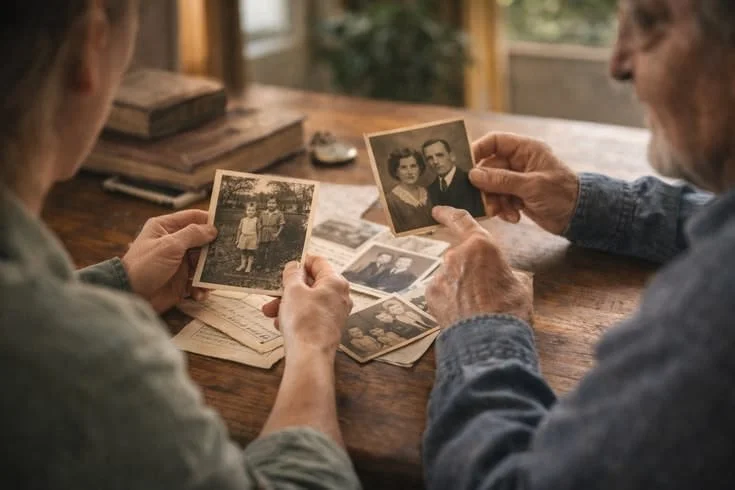
There is no single way to grieve.
There is no timeline you have to follow.
There is no checklist that tells you when you're “doing it right.”
And there is no universal set of rules for what grief is supposed to look like.
Grief is deeply personal. It is shaped by the person you lost, the relationship you shared, the circumstances surrounding the loss, your personality, your culture, your history, your support system, and the meaning that relationship held in your life.
Sometimes grief looks like crying every day.
Sometimes it looks like going to work and carrying on with your responsibilities.
Sometimes it looks like anger.
Sometimes it looks like laughter.
Sometimes it looks like talking about the person constantly.
Sometimes it looks like avoiding their name because saying it hurts too much.
And sometimes, grief looks like setting out a coffee cup every morning for someone who will never sit down at the table again.
The Coffee Cup
Imagine a woman whose husband has died.
Every morning, she gets up and makes coffee.
And every morning, she takes out two cups.
She puts one in front of herself.
And she puts one in the place where her husband used to sit.
Someone might look at this and think:
“She needs to stop doing that.”
They might wonder if she understands that he is gone.
But she does.
She knows he isn't coming back.
She knows he won't be walking through the door.
She knows the coffee cup is not going to somehow change reality.
She isn't confused about what happened.
She simply finds comfort in the ritual.
For years, making two cups of coffee was part of her morning. It was part of their life together. It was something they did without thinking about it.
Now, making that second cup gives her a moment of connection.
It gives her a moment to remember.
It gives her a moment to feel close to someone she loved deeply.
And if that ritual isn't preventing her from living her life, isn't causing her harm, and brings her comfort, why would we tell her she is grieving incorrectly?
She doesn't need permission from anyone else to grieve in the way that feels meaningful to her.
Maybe one day she will stop making the second cup.
Maybe she won't.
Maybe the ritual will change.
Maybe eventually she'll make one cup of coffee but still sit in the same chair and think about him.
There doesn't need to be a deadline.
Grief Doesn't Follow a Straight Line
We sometimes talk about grief as though it happens in predictable stages.
You move through one feeling.
Then another.
Then another.
And eventually, you arrive at acceptance.
Real grief is rarely that simple.
You can feel acceptance in the morning and devastation by dinner.
You can laugh at a memory and cry five minutes later.
You can have a good day and then feel completely undone by a song, a smell, a photograph, a holiday, or a familiar place.
You may think you are doing better and then suddenly find yourself missing the person with an intensity you haven't felt in months.
That doesn't necessarily mean you've gone backward.
It means you loved someone.
Grief can move in waves.
And those waves may continue to come long after other people assume you should be “over it.”
There Are So Many Different Ways to Grieve
Some people need to talk.
A lot.
They may want to tell stories, look at pictures, talk about memories, or say the person's name.
Others may need quiet.
They may not want to talk about the loss at all.
Some people cry openly.
Others rarely cry.
Some people find comfort in keeping belongings exactly as they were.
Others need to put everything away because seeing those things is too painful.
Some people return to work quickly.
Others need significant time away.
Some people want company.
Others need solitude.
Some people find comfort in visiting a grave, keeping photographs nearby, wearing something that belonged to the person, cooking their favorite meal, listening to their favorite music, or continuing traditions they shared.
Others may not want reminders around them at all.
None of these responses automatically tells us whether someone is grieving “correctly.”
Grief is not a performance.
You don't have to grieve in a way that makes sense to everyone else.
Continuing Bonds Are Part of Grief
Sometimes people worry that maintaining a connection to someone who died means they aren't accepting the loss.
But remembering someone and accepting that they are gone can coexist.
You can know someone has died while still talking to them in your mind.
You can keep their photograph on your nightstand.
You can continue making their favorite recipe.
You can celebrate their birthday.
You can visit a place you used to go together.
You can wear their sweatshirt.
You can tell your children stories about them.
You can still say, “I wish you were here.”
These things don't necessarily mean you're refusing to accept reality.
They can be ways of carrying a relationship forward in a different form.
The relationship has changed because the person is no longer physically here.
But the love doesn't have to disappear.
What About Grieving “Too Much” or “Not Enough”?
This is where things can become complicated.
There isn't a specific amount of crying that determines whether someone is grieving appropriately.
There isn't a certain number of months after which you are supposed to be finished grieving.
And there isn't a minimum amount of visible sadness required to prove that you cared.
Someone can appear to be functioning relatively well and still be experiencing profound grief internally.
Someone else may be visibly devastated for a long time.
Both experiences can be real.
At the same time, there are circumstances when additional support can be helpful.
If grief is making it extremely difficult to function, care for yourself, maintain relationships, work, sleep, or engage in daily life, it may be worth reaching out for support.
If grief feels unbearable or you're struggling to find a way forward, you don't have to navigate it alone.
Seeking help doesn't mean you're grieving incorrectly.
It means you're getting support while carrying something incredibly heavy.
Grief Can Be Complicated by Other Losses
Sometimes the person who died isn't the only thing you're grieving.
You may also be grieving the life you thought you would have.
You may be grieving future plans.
You may be grieving the role that person played in your family.
You may be grieving your identity.
You may be grieving the version of yourself that existed before the loss.
For example, losing a spouse may mean grieving not only the person but also:
The routines you shared
Parenting together
Holidays together
Future plans
Financial security
Companionship
Physical affection
The person you called when something happened
The feeling of being part of a team
This is one reason grief can feel so complicated.
You're not grieving just one thing.
You're grieving an entire world that changed when that person died.
There Is No “Right” Timeline
One of the most painful parts of grief can be other people's expectations.
Eventually, people may stop asking how you're doing.
Friends may assume you're feeling better.
Coworkers may expect you to return to normal.
Family members may think you should be ready to move forward.
But grief doesn't operate according to everyone else's calendar.
You may feel ready to return to certain parts of your life before you're ready for others.
You may have moments where you feel genuinely happy and then experience guilt because you're happy.
You may begin making plans again and still deeply miss the person who died.
Moving forward does not mean moving on from the person.
You can continue living while carrying the love and loss with you.
Grief Can Look Different Every Day
One day you might want to talk about your loved one.
The next day you might not.
One day you might want to look through photographs.
The next day you might put them away.
One morning you might make two cups of coffee.
Another morning, you might only make one.
You are allowed to respond to the grief that is present today.
You don't have to decide how you're going to grieve forever.
You can listen to yourself.
You can notice what feels comforting.
You can notice what feels overwhelming.
You can allow your needs to change.
What Does Healthy Grieving Look Like?
Healthy grieving doesn't necessarily mean that you're happy, positive, or “moving on.”
It also doesn't mean that you're grieving in a particular way.
Healthy grief can involve allowing yourself to experience the loss while gradually finding ways to continue living alongside it.
That might mean:
Allowing yourself to feel difficult emotions
Staying connected to supportive people
Continuing daily responsibilities when you're able
Taking care of your physical needs
Finding meaningful ways to remember your loved one
Giving yourself permission to experience moments of joy
Allowing your grief to change over time
Asking for support when you need it
And sometimes, healthy grieving looks messy.
It may not look productive.
It may not look positive.
It may not look the way anyone expected.
That's okay.
Therapy Can Help You Grieve Without Telling You How to Grieve
Therapy isn't about teaching you the “correct” way to grieve.
There isn't one.
Grief therapy can provide a space where you don't have to protect other people's feelings, pretend you're doing okay, or worry that you're taking too long.
You can talk about the person you lost.
You can talk about the anger.
You can talk about the guilt.
You can talk about the relief that sometimes comes with a complicated loss.
You can talk about the memories you can't stop thinking about.
You can talk about the memories you can't bear to think about.
You can talk about the loneliness.
You can talk about the parts of your life that have changed.
And you can explore what it means to continue living while carrying the loss with you.
Therapy can also help you recognize when grief may be becoming especially difficult to navigate and identify additional support when needed.
Most importantly, therapy can offer a place where your grief doesn't have to be edited into something more comfortable for someone else.
Your Grief Is Yours
Maybe you keep making the coffee.
Maybe you don't.
Maybe you cry every day.
Maybe you rarely cry.
Maybe you want to talk about your loved one constantly.
Maybe you need silence.
Maybe you keep their belongings.
Maybe you can't look at them yet.
Maybe you return to work quickly.
Maybe you need more time.
There is no universal “right” way to grieve.
There is only your experience of loss.
And as long as the ways you are coping are healthy and allowing you, over time, to remain connected to yourself and your life, you don't need to compare your grief to anyone else's.
You don't need to prove how much you loved someone by how you grieve them.
You don't need to rush yourself because someone else thinks you should be further along.
And you don't need to stop loving someone simply because they are no longer physically here.
Sometimes grief is learning how to carry love and loss at the same time.
Grief Therapy in Connecticut
If you're grieving the death of a spouse, parent, child, friend, family member, or another important person in your life, you don't have to navigate the experience alone.
At Growth Era Counseling & Wellness, online therapy is available throughout Connecticut for adults experiencing grief, loss, life transitions, anxiety, depression, trauma, and other mental health concerns.
Therapy can offer a supportive space to process your loss, make sense of the changes that follow, and find ways to move through grief without being told there is a “right” way to do it.
Your grief is personal. Your relationship was personal. And your way of carrying that loss can be personal, too.