
Growth Era Counseling & Wellness | Telehealth Therapy Across Connecticut

If you’ve ever felt stuck in a loop of overthinking, worry, or avoidance, you’re not alone.
Anxiety doesn’t just show up randomly—it tends to follow a predictable cycle. And once you understand that cycle, it becomes much easier to interrupt it.
At Growth Era Counseling & Wellness, we often help clients across Connecticut learn how anxiety operates beneath the surface—so they can respond to it differently, not just react to it.
What Is the Anxiety Cycle?
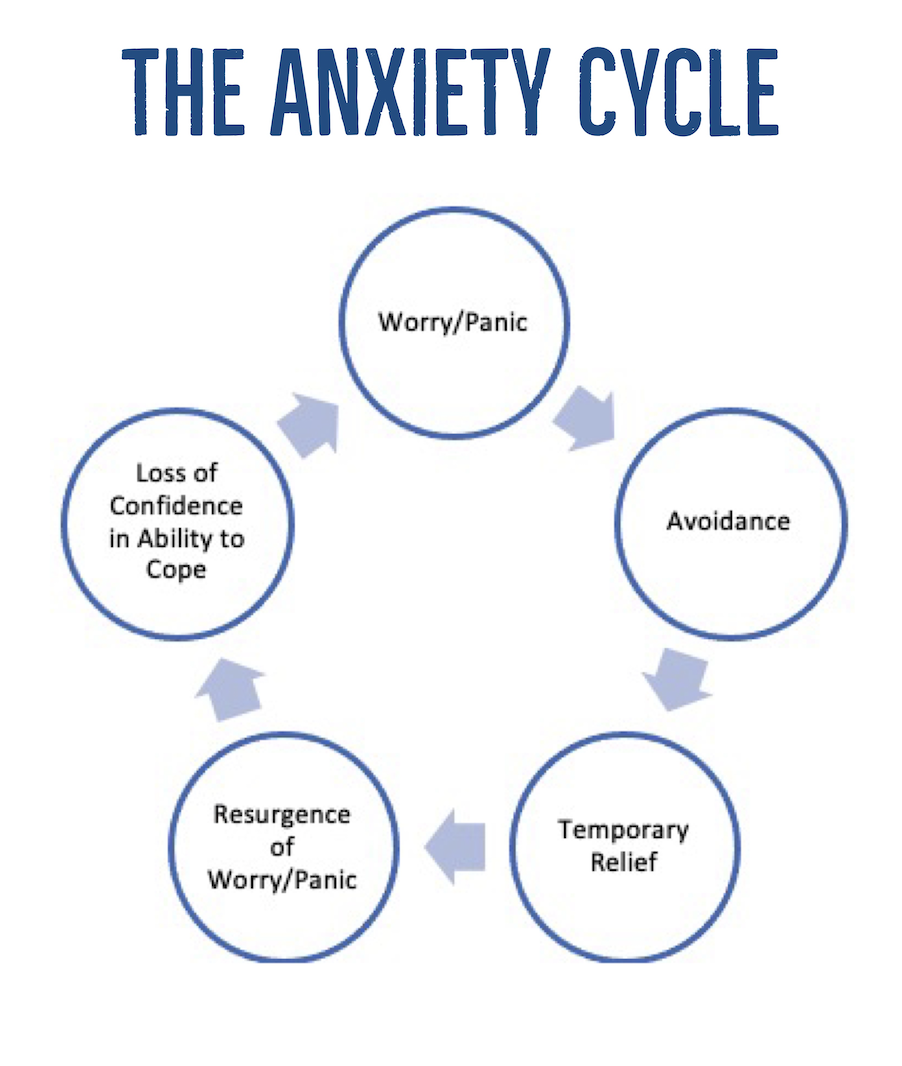
Anxiety often works in a loop that reinforces itself over time.
Here’s a simplified version of the cycle:
Trigger (a situation, thought, or feeling)
Anxious thoughts (what ifs, worst-case scenarios)
Physical symptoms (racing heart, tension, restlessness)
Behavioral response (avoidance, reassurance-seeking, over-preparing)
Temporary relief
Long-term reinforcement of anxiety
That last step is key—because even though the behavior helps in the moment, it actually keeps anxiety going.
Breaking Down the Cycle (With Real-Life Examples)
1. The Trigger
A trigger can be external or internal:
An upcoming meeting
A social situation
A body sensation (like a racing heart)
A thought like “What if I mess this up?”
Example:
You get an email about presenting in a meeting next week.
2. Anxious Thoughts
Your mind tries to predict and prepare—but often jumps to worst-case scenarios:
“I’m going to mess up.”
“Everyone will notice I’m anxious.”
“I’ll embarrass myself.”
This pattern is often called catastrophic thinking.
3. Physical Symptoms
Your body responds as if there’s real danger:
Increased heart rate
Muscle tension
Shallow breathing
Restlessness or nausea
This is your nervous system activating a fight-or-flight response.
4. Behavioral Response
To reduce discomfort, you might:
Avoid the situation
Procrastinate or cancel
Over-prepare excessively
Seek reassurance from others
Example:
You consider calling out of the meeting or spend hours over-preparing to feel “safe.”
5. Temporary Relief
When you avoid or reduce the threat, anxiety drops—for a moment.
You might feel:
Relief
Less tension
A sense of safety
But this relief comes with a hidden cost.
6. Reinforcement of Anxiety
Your brain learns:
“Avoidance worked. This must really be dangerous.”
So the next time a similar situation comes up, anxiety returns—often stronger.
This is how anxiety becomes a cycle instead of a one-time experience.
Why the Anxiety Cycle Feels So Hard to Break
Because it works—at least in the short term.
Avoidance, reassurance, and over-preparing all reduce anxiety temporarily.
But they also:
Prevent you from learning that you can cope
Keep your fear unchallenged
Shrink your comfort zone over time
This is why anxiety can start to feel like it’s taking over more and more areas of your life.
How to Interrupt the Anxiety Cycle
Breaking the cycle doesn’t mean eliminating anxiety completely.
It means learning how to respond differently at key points in the cycle.
1. Notice the Pattern
The first step is awareness.
Start to ask yourself:
What triggered this feeling?
What thoughts showed up?
What did I feel in my body?
What did I do next?
Simply recognizing “This is anxiety” can create a small but important pause.
2. Gently Challenge Anxious Thoughts
Instead of automatically believing every thought, try:
What’s the evidence for this?
Is there another possible outcome?
Am I predicting or assuming?
You don’t need to force positive thinking—just aim for more balanced thinking.
3. Regulate Your Body
Because anxiety is physical, body-based strategies can help:
Slow, deep breathing
Grounding exercises (noticing your surroundings)
Gentle movement or stretching
These don’t eliminate anxiety instantly—but they can reduce the intensity.
4. Reduce Avoidance (Gradually)
Avoidance is what keeps the cycle going.
Instead, try:
Taking small, manageable steps toward the situation
Staying in the situation a little longer than usual
Letting yourself feel some discomfort without escaping immediately
Example:
Instead of canceling the meeting, you attend—but allow yourself to be a little anxious.
Over time, this teaches your brain:
“I can handle this—even if it’s uncomfortable.”
5. Shift from Control to Tolerance
A common goal with anxiety is:
“I need to feel completely calm before I do this.”
But a more helpful shift is:
“I can do this while feeling some anxiety.”
This builds confidence and reduces the power anxiety has over your choices.
A Real-Life Example of Interrupting the Cycle
Situation: Social gathering
Trigger: Invitation to an event
Thought: “I’ll feel awkward and not know what to say”
Behavior (old pattern): Decline the invite
Result: Temporary relief → increased anxiety next time
New approach:
Notice the thought
Remind yourself it’s a prediction, not a fact
Attend for a short period of time
Use grounding if anxiety rises
Outcome:
Anxiety may still show up—but it doesn’t control the decision.
How Therapy Can Help
If anxiety feels like it’s running the show, therapy can help you understand and interrupt these patterns in a supportive, structured way.
In therapy, you can:
Identify your unique anxiety triggers and cycles
Learn practical tools to manage anxious thoughts and physical symptoms
Reduce avoidance and build confidence over time
Develop healthier ways of coping with uncertainty and discomfort
At Growth Era Counseling & Wellness, we provide telehealth therapy for adults across Connecticut, helping clients better understand their anxiety and build skills that actually work in daily life.
You don’t have to eliminate anxiety to feel better—you just need new ways to respond to it.